Inside the demanding world of contemporary pro-level oversteer competition, success is not merely purely a result of sheer torque or driver aggression. Instead, it has become a multifaceted discipline which requires a meticulous fusion of picking a inherently capable vehicle platform, arming it with the highest-quality drift-spec hardware, and, most critically, grasping its dynamic performance on the track through cutting-edge vehicle dynamics analysis tools. This definitive handbook will serve as your master plan starting from the initial concept of a competition vehicle through to the last telemetry-optimized refinements that turn a capable vehicle into a consistent podium finisher. We will examine in detail the methodical process of car suspension tuning, showing how a modern vehicle dynamics tool like GripDial eliminates approximation and delivers exceptional visibility into your vehicle's real-world behavior.
The bedrock of any exceptional drift car is, undoubtedly, the platform itself. Several platforms have attained iconic status within the international sliding community due to their inherent weight distribution, robust build quality, and the vast range of aftermarket support available. Picking the optimal platform is the first and most important decision a builder will make. To illustrate, the BMW E36 is universally acknowledged as perhaps the the greatest all-around cars for drifting of all time. Its excellent balanced front-to-rear weight, alongside a RWD setup and bulletproof straight-six motors, creates a car that is simultaneously forgiving for newcomers and highly competitive in the possession of a expert driver. The evolution of this lineage, the E46 model BMW, improves on these attributes with a increasingly developed structure, increased wheel track for enhanced high-speed stability, and yet a greater degree of lock directly from the OEM. A different dominant option in the pro arena is the Chevrolet Corvette C6.
This V8-powered performance car offers a distinctive combination of advantages to the drifting world, featuring a low-mass aluminum structure, a backwards-positioned drivetrain component that helps create an ideal balance, and the colossal low-end power of a big GM LS engine. This blend makes it an complete monster on track, capable of entering and maintaining continuous slides with relatively effortless use of throttle. For builders desiring exceptional performance per dollar, the 350Z model Nissan excels as a prime choice. It arrives from the factory with a robust platform, a competent OEM locking differential, and the free-revving V6 engine that offers plenty of power and torque for practicing and progressing in the sport. Its newer version, the 370Z model, brings further advancements in chassis stiffness, handling precision, and peak engine performance, establishing its status as a favorite selection among professional competitors. Further legendary cars that deserve consideration are the lightweight Wankel-engined Mazda FC, the ubiquitous S13 Silvia/240SX, the American Ford SN95, the modern E90 3 Series, and the small yet surprisingly fun and instructive Mazda MX-5. All of these platforms gives a different set of attributes, complexities, and possibilities, but they all share the core components essential to serve as a competitive sliding vehicle.
However, choosing the right chassis is only the starting point. To access the complete performance of every of these machines, major modifications to the steering and suspension systems are completely non-negotiable. This is where the world of precision aftermarket parts becomes sharp view. The single most game-changing modification for a dedicated drift car is the installation of a drift-spec steering angle kit. These advanced kits, for example those engineered by industry leaders like SLR, are created to radically increase the vehicle's available lock-to-lock rotation. A OEM street car is extremely constrained in how far its front wheels can turn, a safety trade-off for on-road driving. In drifting, however, extreme steering input is constantly needed to catch and maintain a angle. An steering kit exchanges the OEM hubs, linkages, and potentially control arms with parts that allow the wheels to attain angles beyond 70 or even 80 °, as opposed to a typical stock angle of around 40 to 50 degrees.
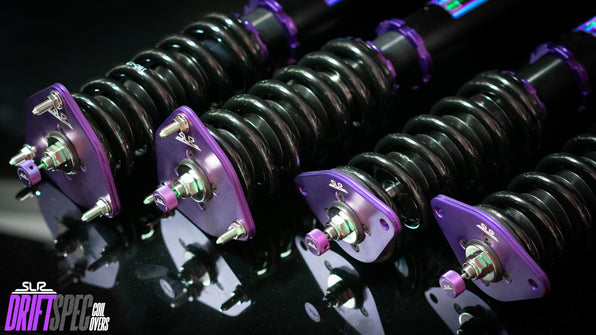
This tremendously greater steering angle offers the pilot with exponentially enhanced control during a angle, enabling it to be considerably simpler to initiate a oversteer moment, maintain it through a long corner, and change fluidly from one angle to the other. The contrast in controllability is truly revolutionary. Combined with a correctly specified angle kit is the every bit as vital upgrade to the car's suspension. Store-bought or including premium road coilovers are just not designed for the particular and harsh needs of drifting. A dedicated pair of suspension units is crucial. These specialized coilovers feature unique valving and spring rates that are tuned for the rapid load shifting that is characteristic of drifting. When a operator initiates a drift, the vehicle's weight is shifted violently to the front of the turn. Correct competition coilovers handle this movement in a consistent way, enabling the vehicle to stabilize quickly and providing the pilot precise response through the steering wheel and seat. They additionally enable exact tuning of ground clearance, shock absorber rate, and cross-weight, which are all key aspects of dialing in the vehicle's behavior to a particular track or piloting approach. In combination, a top-tier steering angle kit and a expertly specified system of competition adjustable dampers form the absolute hardware cornerstone upon which all future refinement is built.
Once the essential hardware is in place, the following essential step in the project is the detailed adjustment of the car's alignment. This is the domain of vehicle alignment optimization, a methodology that can feel intimidating to the beginner but is, in reality, the secret to turning a set of high-performance parts into a cohesive and controllable whole. The most debated parameter of alignment for oversteer is certainly camber. Wheel camber is the tilt of the tire relative to the perfectly straight axis when looked at from the front-on of the car. If the upper part of the tire is leaning towards the car, this is called negative camber. For oversteer driving, inward-leaning wheels on the steering tires is widely used and is seen as essential. The purpose is intrinsically linked to vehicle dynamics.
When a vehicle is turning at extreme angles, the body leans to the outer of the bend. This body roll causes the outer front tire to reduce its best grip area with the track surface. By adding an inward tilt, the tire is pre-leaned to account for this roll. As the chassis tilts into the bend, the outside front tire flattens out on the track, increasing its traction at the exact point when it is most required for steering authority. Usually, front adjustments for a competition sliding vehicle fall between approximately -3 degrees to as high as -5 degrees or even more, contingent on the parameters of the car configuration, compound type, and pilot preference. The rear axle tires also utilize inward lean, but the settings are usually more modest and subtler than the front. Excessive negative camber at the back can cause the vehicle to extremely loose and challenging to predict on power use, as it shrinks the usable tire footprint of the powered wheels during linear acceleration. Therefore, rear adjustments are frequently in the vicinity of -1 degree to -3 degrees, achieving a precise compromise between offering enough lateral bite to help in entering and holding the angle while also maintaining usable grip for power-down the bend. Camber is just one part of the more complex alignment puzzle, which also involves toe, caster angle, and steer correction modification.
Toe describes the orientation of the wheels when viewed from a bird's-eye view. Inward toe means the leading edges of the tires are closer together than the rear edges, while negative toe means the reverse. For sliding, a modest amount of front negative toe is often run to sharpen the initial response steering feel, making the car feel more responsive and ready to initiate a drift. Rear axle toe is generally set to zero or a extremely small amount of positive toe to promote stability under acceleration. Caster is the longitudinal or backwards angle of the suspension pivot when viewed from the side of the car. Increased caster angle increases self-centering and stability solidity, and it also boosts camber gain during cornering, which is extremely advantageous. Tuning these parameters is a detailed dance where a adjustment to a single value can and will influence the other settings. The old-school approach for dialing in a car's suspension geometry for competition has historically been a time-consuming endeavor of experimentation and feeling. A tuner or team would make a change based on intuition, run the car on track, depend on the pilot's individual feel and feedback, and then make another change. This process would iterate time after time until the car felt "acceptable" or the allotted practice time was exhausted. This system is not only incredibly inefficient in terms of man-hours and resources, but it is additionally deeply imprecise.
Driver perception is a famously unreliable metric, affected by countless factors such as tiredness, evolving track conditions, weather, and just the mindset of the driver on that specific run. What feels "loose" on one pass might feel "pushing" on the next lap, resulting in contradictory data and frustrating changes. This age-old limitation in chassis setup is precisely where state-of-the-art telemetry systems has intervened to transform the methodology.
The rise and adoption of advanced suspension tuning applications has ushered in a completely new era for building and perfecting competitive drift machines. This new generation of tools, exemplified by cutting-edge systems like data acquisition tools, function by physically capturing the live physical behavior of the chassis as it is being driven on the track. Unlike relying on driver feel, these tools gather objective information on critical factors such as damper compression and extension, wheel speed, G-force loading, wheel angle, and driver input position. This raw telemetry is then interpreted by sophisticated applications that can plot and decode the metrics in a clear way. For the very first time, tuners and builders can observe specifically what the car is performing at any given millisecond of a drift. This function transforms the entire alignment optimization process. Imagine the aforementioned goal of dialing in the front axle negative camber for a given car. Rather than applying a modification from -3 degrees to -3.5 degrees and then testing several passes to try and "perceive" a change, a suspension tuning tool can give instant and definitive feedback. The software can display visually how the tire's contact patch is performing during the critical phases of a drift: turn-in, mid-corner, and transition. It can show if the current value is allowing the loaded tire to keep ideal loading or if the tire is over-stressed on its outside edge.
The tool can then provide empirical recommendations for change. Perhaps the data reveals that the tire coilover setup tips is still overworking its edge at -3.5 degrees of negative camber, indicating that a move towards negative camber, say -4 degrees, might be beneficial. Alternatively, the data might show that the tread is not achieving temperature or that the inside edge is degrading too quickly, which could point to that there is excessive negative camber and a small reduction back to -3.2 degrees would be more efficient. This level of precision and useful analysis was completely unimaginable in the time of pure manual tuning.
The impact of employing a advanced vehicle dynamics tool reaches well beyond just setting camber angles. It becomes an invaluable coilover setup tips that is tailored to your specific chassis. When adjusting the rebound and compression settings on your coilovers, rather than using general advice or mimicking another driver's numbers, you can utilize the data to see how the chassis is performing in relation to your tweaks. The software can show the suspension travel data over a section of track, revealing if the coilovers are managing the chassis motion effectively or if they are permitting the car to oscillate uncontrollably after a flick. It can aid in identifying challenges like excessive compression or losing droop, enabling you to make informed choices to helper springs, rebound/compression values, or stance. This methodology translates similarly to the detailed process of suspension geometry optimization. Beyond camber angle, the tool can provide analysis into how modifications to toe and caster are affecting the chassis's stability during various maneuvers of a slide. For instance, it can assist you to find the ideal amount of front negative toe for your specific angle kit configuration and competition style by analyzing the speed of turn-in response and the predictability of the car at maximum lock. This transforms the software an incredibly effective vehicle dynamics manual that is constantly informed by the live dynamics of your personal chassis on the circuit. It moves the entire project from a subjective skill into a scientific development procedure.
Additionally, the value of a system like modern telemetry is not limited to expert engineers with vast budgets. For the club-level enthusiast, it serves as an powerful equalizer. It in essence gives the tuner with the knowledge of a drift telemetry software expert suspension specialist without requiring the drift telemetry software associated expense. It accelerates the development time by providing clear solutions to problems that would otherwise take seasons of experimentation to answer. A driver can see how their particular chassis behaves to various adjustments, building a deeper comprehension of vehicle dynamics in the process. It furthermore democratizes high-level performance tuning principles, permitting all drivers with the drive to optimize their car to accomplish it in a efficient and productive manner. This is particularly significant in a discipline like oversteer competition, where tuning knowledge has in the past been a highly secretive asset among top drivers. Today, that knowledge can be in the toolkit of any motivated builder.
In the final analysis, the path to building and tuning the perfect championship-contending drift car is a comprehensive project that smoothly integrates time-honored hardware wisdom with 21st-century digital solutions. It begins with the strategic selection of a capable car, then enhanced by the application of critical drift-spec components like maximum-angle angle modification systems and expertly selected drift-spec suspension units. The build then moves into the precision stage of alignment optimization, where settings like camber, toe setting, and caster angle are meticulously configured to complement the car's new capabilities and the operator's personal technique. Ultimately, and what truly differentiates the today's process from the past, is the use of a advanced vehicle dynamics tool. This tool eradicates the uncertainty and inefficiency of solely subjective setup by providing quantifiable, real-time information on how the vehicle is truly functioning. It acts as an indispensable suspension tuning tool, a comprehensive drift suspension tuning guide, and a master chassis development system. Together, this integrated methodology ensures that every aspect of the drift machine—from the choice of the car to the final adjustment on the suspension—is perfected for ultimate success on the track. It represents the full maturation of the discipline of sliding, connecting mechanical pilot talent with precise suspension engineering to create the most effective vehicles attainable.